Why I Started a Picture Diary with My 7-Year-Old
Key Highlights
Discover how starting a picture diary with your 7-year-old can foster a love for writing, communication, and self-expression. Learn our flexible method, from re
Writing Sparked by a Reading Log
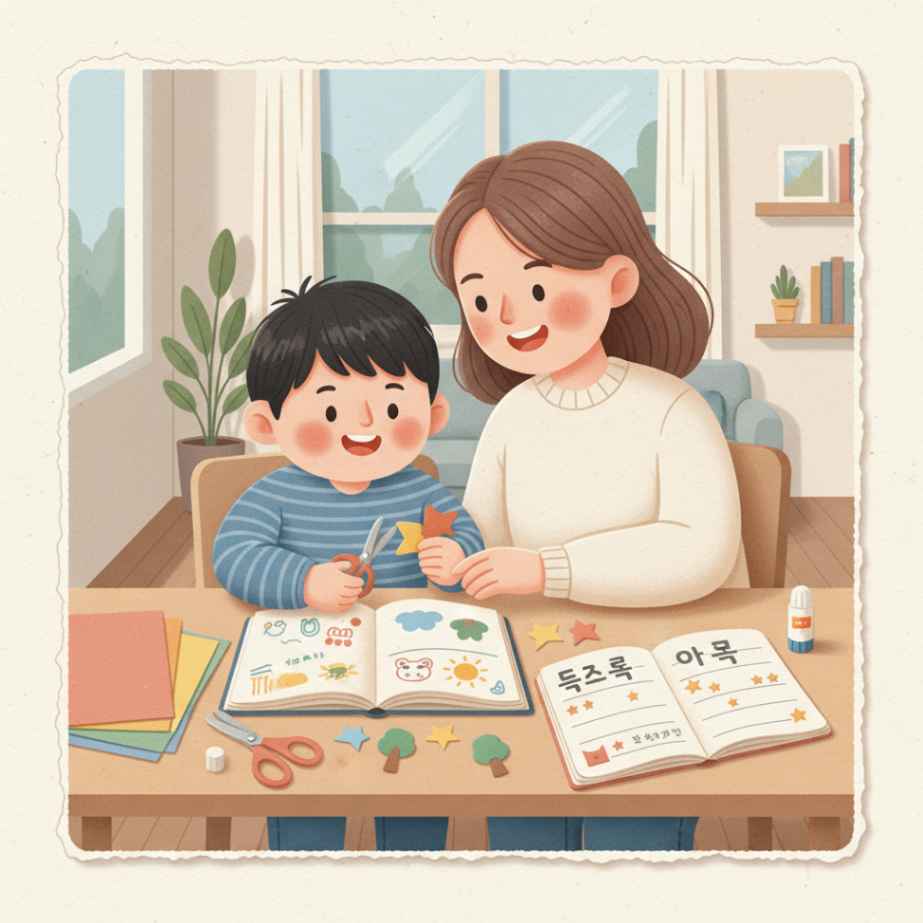
My child started a reading log at kindergarten. It was an activity where, twice a week, they'd jot down the title and author of a storybook read by the teacher, much like a personal spending ledger. Initially, it was challenging, and they disliked it. But now, almost a year later, they've adapted and grown so much that they've filled three reading logs! Wanting to continue this kindergarten habit at home, we often visit the library on weekends to borrow and read books, maintaining the consistent routine of recording them in the reading log.

Our Own Diary: Enjoying Daily Reflection Like 'Play'
Now that the fear of writing seems to have disappeared, I wanted to expand on it a bit more. That's when 'diary writing' with my child came to mind. However, I didn't want it to feel like homework. I believed it should be an 'extension of play,' as enjoyable as building with LEGOs. On weekday evenings, while enjoying a delicious dinner, I'd ask my child, "How was your day?" and they'd excitedly share their stories. I type those stories into a picture diary website, and my child meticulously copies the large letters appearing on the screen onto paper. Just 10 minutes! During this pressure-free time, my child gets to express their joyful experiences of the day in beautiful letters and gain the precious experience of writing with their own tiny hands.
More Precious Than Perfection: The Process of Recording
The most important thing for me isn't the perfection of my child's handwriting. It's perfectly fine if the spelling is a little off or the letters are crooked. The 'process' itself—where my child calmly reflects on their day, freely expresses themselves in their own language, and sees that expression preserved on paper—is what's truly valuable. I believe that through this process, my child will naturally learn to organize and express their thoughts and feelings. And they'll come to see writing not as a chore, but as an enjoyable game.
Building a 'Record of Life' Through a Child's Eyes
When these short but precious records accumulate, 10 minutes each day, they won't just be simple diary entries. They'll become the most special 'record of life' in the world, filled with my child's clear language and pure perspective. In the future, these records will serve as precious evidence vividly showing how my child grew, and I believe they'll become an excellent tool for deep self-understanding and reflection. As parents, we get to preserve our child's most innocent and brightest moments forever.
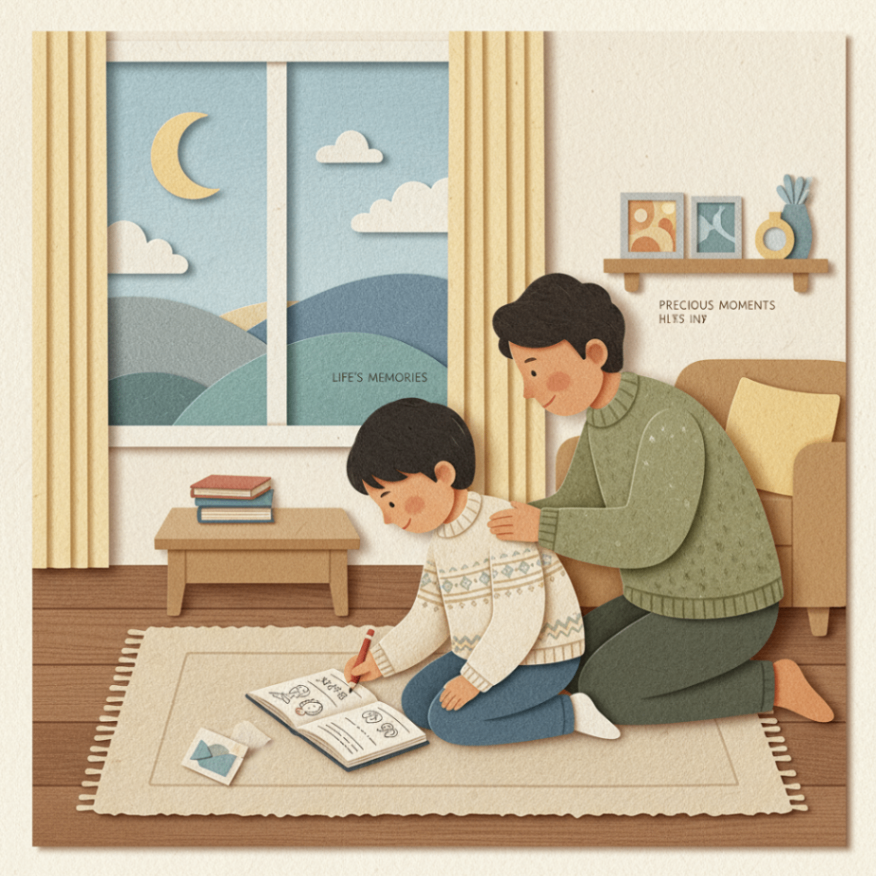
Seeing how a small act of courage, starting with a reading log, led to the habit of recording my child's day, I once again realized the power of documentation. Writing a diary with my child isn't just about putting words on paper. It's a special journey of respecting my child's life, supporting their growth, and creating beautiful memories together. Why don't you try starting this most special 'life record play' with your child too?
How to Write a Picture Diary
Step 1: Preparing 'Our Own Diary'
- Printing Diary Pages: Initially, I thought about buying a beautiful diary, but then I worried that if we didn't write every day, a fancy notebook might feel like too much pressure for my child. So, I found a template with diary lines and print it double-sided on A4 paper. These printed sheets are light, and it's less daunting if they get lost or messed up, making them comfortable for both my child and me to use. My child seemed to feel a sense of 'their own diary' by attaching a cover they chose themselves.
- Preparing a Dictation Website: I set up my laptop to dictate my child's stories. The key was a tool where my child could see their stories appear engagingly and then copy them. It features large characters and clear spacing. It's also easy to access via a browser on a tablet, and adding it to favorites on the home screen allows for quick starts, which is very convenient.
Step 2: Starting with a Casual Suggestion, 'Shall We Try Together?'
After my child returns from kindergarten and we've had dinner, when there's a moment of calm, I'll ask them, "What fun things happened today? Anything you remember? Shall we write it in your diary together?" The important thing was that it was a 'suggestion,' not an 'obligation.' If my child wasn't feeling well or seemed too tired, I wouldn't force it. When my child starts talking, I turn on the laptop and access the dictation website. My child seems to enjoy the fact that I'm seriously listening to and recording their stories.

Step 3: Dictating in the Child's Own Words
It's perfectly fine if my child talks about playing with friends at kindergarten, drawing pictures, or even the scenery they saw on the way. I transcribe exactly what my child says onto the website. I try my best to input their somewhat awkward sentences or repetitive expressions as they are.
If the story gets too long or needs to be concisely organized, I use the 'AI Correction' button on the website. Selecting options like 'shorten the text' or 'expand to more than X characters' and then clicking the dictation start button, my child's story appears naturally refined on the screen. For example, if my child said, "Today I rode the slide with A at kindergarten and it was so, so fun!" it might be refined to, "Today I rode the slide with A at kindergarten. It was really fun." In this process, the original intent of my child isn't compromised, and the sentences become easier for them to read and write later.
Step 4: The Child's Time to Copy, Like Drawing a Picture
When we switch to the dictation screen, my child's story is displayed in large, clearly spaced letters. My child can still read simple syllables, but they're not yet at the stage of perfectly reading and understanding full sentences. However, they can recognize the letters on the screen 'like pictures' and copy them. Watching them slowly trace each letter, stroke by stroke, as they transfer their story onto paper, they look quite serious. In this process, my child seems to naturally learn the shapes of letters and understand the importance of spacing. My child often beams with pride when they see a completed line of writing.
When is the Best Time to Write a Diary?
I don't believe this diary-writing method is a quick fix to instantly improve a child's writing skills. Instead, it's a way we tried when I felt we needed a meaningful time to conclude the day through communication with my child. When I'm curious about what my child saw, felt, or thought about today, and when I want to cherish those moments instead of letting them slip away. Furthermore, when you hope that your child's experience of organizing and expressing their own stories becomes a small starting point for self-understanding, this diary writing method will likely feel quite useful.
Will This Method Work for Every Child? (Limitations and Exceptions)
Of course, this method might not be a magical solution that works for every child. Each child has a different temperament, and their language development speed and interests will vary. Some children might show resistance to dictation itself, or find daily diary writing boring. In such cases, I think it's important to approach it flexibly, rather than forcing it—perhaps by substituting it with drawing a picture diary, or reducing the frequency. My child sometimes says, "Daddy, can we just talk today?" And when that happens, I respond, "Yes, that's fine! I'll write your story for you today." I respect their opinion. None of this is a set answer. In fact, observing and adjusting based on my child's reactions seems to be an important part of the process itself.
Our diary writing journey with my 7-year-old is still ongoing. I'm not yet sure what changes this routine will bring to my child, but at the end of the day, when I listen to their stories, write letters together, and see their satisfied smile looking at the completed diary, I anticipate that this time will remain a precious record for our family. Even if the handwriting is sometimes messy, or the stories are quirky, I believe that this entire process is a small step for my child to find their own way of understanding and expressing the world. This story will become the beginning of another day.